|
|
||||
|
LEDRunLights LLC, Manufacturer of high power LED Module and high power LED light product for General lighting applications, Click here for more How LED function
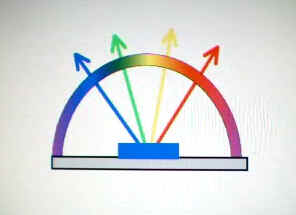
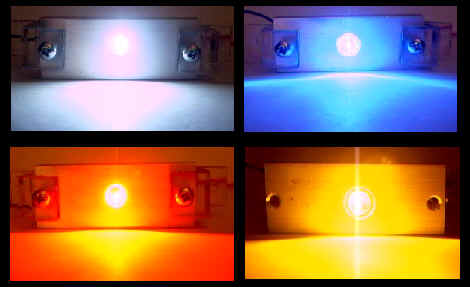
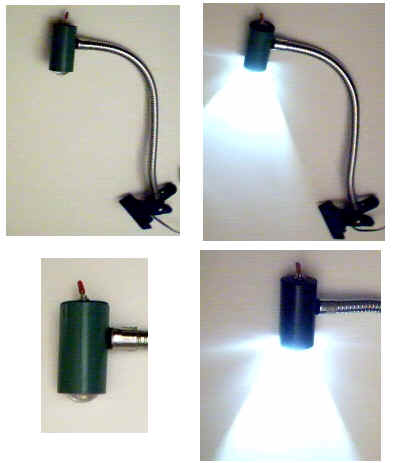
1. LED Lamps with gooseneck and Spring clip (49 types). 2. LED lamps with Flexible tube and metal neck (50 types). Click here for more. 3. LED for signs, Backlights, channel letter and Traffic signal. LED light products available in colors: Blue, Red, White, Yellow, and Green. 4. LED for General Lighting and Decoration, available with 3, 6 and 9 high power LED (45 types). 5. LED light products available in colors: Blue, Red, White, Yellow, and Green. 6. Illuminate highway and freeway signs using High power LED product (27 types). 7. Lighting bar for parking Garage 3 to 12 feet bar with high power LED heads lamp, each head can be with single or double sides light source 8. Cost-effective traffic signal lamps using LED (light-emitting diodes) 9. LED desk lamp Click here to Build your Lamp 10. LED wall lamp Click here to Build your Lamp 11. LED table lamp Click here to Build your Lamp 12. LED lamp with magnet base Click here for Magnet Base LED Lamp LEDRunLights, Manufacturer of high power LED and high power LED light products for General lighting applications. LED Run Lights introducing a unique energy efficient LED's, The LED designed with exceptional heat dissipating capabilities and high efficient thermal management that increases the LED performance. LED Run Lights manufactures the LED lens with special material that will not change the optical characteristics during time. What is LED light and how LED function LED is a diode, LED is a semiconductor chip doped, with impurities to create a p-n junction. The current flows from the p-side, or anode, to the n-side, or cathode, but not in the reverse direction. Charge carriers electrons and holes that flow into the junction from electrodes with different voltages (3 to 3.9VDC). When an electron meets a hole, it falls into a lower energy level, and releases energy in the form of a photon (Photon=light). The wavelength of the light emitted, and therefore its color, depends on the band gap energy of the materials forming the p-n junction. In silicon or germanium diodes, the electrons and holes recombine by a non-radiative transition that produces no optical emission, because these are indirect band gap materials. The materials used for an LED have a direct band gap with energies corresponding to near-infrared, visible or near-ultraviolet light. LED development began with infrared and red devices made with Gallium Arsenide. Advances in materials science have made possible the production of devices with ever-shorter wavelengths, producing light in a variety of colors. LED’s are usually built on an n-type substrate, with an electrode attached to the p-type layer deposited on its surface. P-type substrates, while less common, occur as well. Many commercial LED’s, especially GaN/InGaN, also use sapphire substrate or Silicon carbide Substrates that are transparent to the emitted wavelength, and backed by a reflective layer, increase the LED efficiency. The refractive index of the package material should match the index of the semiconductor, otherwise the produced light gets partially reflected back into the semiconductor, where it may be absorbed and turned into additional heat, thus lowering the efficiency. This type of reflection also occurs at the surface of the package if the LED is coupled to a medium with a different refractive index such as a glass fiber or air. The refractive index of most LED semiconductors is quite high, so in almost all cases the LED is coupled into a much lower-index medium. The large index difference makes the reflection quite substantial and this is usually one of the dominant causes of LED inefficiency. Often more than half of the emitted light is reflected back at the LED-package and package-air interfaces. To minimize the light reflection we using a dome-shaped package with the diode in the center so that the outgoing light rays strike the surface perpendicularly, at which angle the reflection is minimized. An anti-reflection coating may be added as well. The package may be cheap plastic, which may be colored, but this is only for cosmetic reasons or to improve the contrast ratio; the color of the packaging does not substantially affect the color of the light emitted. Other strategies for reducing the impact of the interface reflections include designing the LED to reabsorb and reemit the reflected light (called photon recycling) and manipulating the microscopic structure of the surface to reduce the reflectance, either by introducing random roughness or by creating programmed moth eye surface patterns. Conventional LED’s are made from a variety of inorganic semiconductor materials, producing the following colors for example: The light emitted from using Aluminum gallium arsenide (AlGaAs) is red and infrared. The light emitted from using Aluminum gallium phosphide (AlGaP) is green. The light emitted from using Aluminum gallium indium phosphide (AlGaInP) is high-brightness orange-red, orange, yellow, and green. The light emitted from using Gallium arsenide phosphide (GaAsP) is red, orange-red, orange, and yellow. The light emitted from using Gallium phosphide (GaP) is red, yellow and green. The light emitted from using Gallium nitride (GaN) is green, pure green (or emerald green), and blue also white (if it has an AlGaN Quantum Barrier). The light emitted from using Indium gallium nitride (InGaN) is 450nm - 470nm — near ultraviolet, bluish-green and blue. The light emitted from using Silicon carbide (SiC) as substrate is blue. The light emitted from using Sapphire (Al2O3), as substrate is blue. The light emitted from using Zinc selenide (ZnSe) is blue. The light emitted from using Diamond (C) is ultraviolet. LED Run Lights- Light Emitting Diode Run Lights
Click here for more on LED Light Product LEDRunLights LLC, Manufacturer of high power LED Module and high power LED light product for General lighting applications. LED Run Lights introducing a unique energy efficient high power LED module (more lights per watts then incandescent or fluorescent bulbs) Typical the LED lighting is 80-105 lumens per watts. conventional incandescent light bulbs are typical about 15 lumens per watt range, while compact fluorescent lamps is about 50 lumens per watt. LEDRunLights LLC designed the LED with exceptional heat dissipating capabilities and high efficient thermal management that increases the LED performance, Keeping LED COOL is the key for high quality LED that extend the LED life. LEDRunLights LLC manufactures the LED lens with special material that will not change the optical characteristics during time. LEDRunLights LLC, Manufacturer of LED insert modules, the LED insert modules embedded into heat sink. LED light product available in lighting colors: Blue, Red, White, Yellow, and Green. Application: Backlighting, signs, Signage and channel letter. Customer's special requests are welcome. LED is a Green energy lighting Typically, the electricity used over the lifetime of a single incandescent bulb costs typically 8 times the original purchase price of the bulb itself. Compact Light Emitting Diode (LED) have revolutionized energy-efficient lighting. LED are small, solid light bulbs which are extremely energy-efficient, LED last 10 times as long as compact fluorescents bulb, and 120 times longer than typical incandescent bulbs, LED electricity costs can be reduced by 80% or more because LED use a fraction of the wattage of incandescent bulbs. Although LED are expensive, the cost is recouped over time in electricity savings, Electric lighting burns typical up to 25% of the average home energy budget. For more information about LED lights click here Application For LEDrunlights products LED for accent lights, led for home lighting, LED energy saving lights bulbs, LED spot light, LED flood light, LED stage lighting, LED for Automotive, LED Traffic signal, LED Backlighting, LED signs, LED Signage and LED for channel letter, LED Architectural and entertainment lighting, LED portable light source, Outdoor and Indoor applications, LED for accent lights, led for home lighting, energy saving lights bulbs, LED spot light, LED flood light, LED TV, stage lighting, LED lower power consumption, Gooseneck lighting lamps for: LED Desk Lamp, LED Table lamp, LED Wall lamp, LED Floor lamps, LED Fixtures lamps, LED Computer Lamp. lamp-led, walls LED lamp Lighting6lamp magnet4lamp Lamp2wall2flexible, acrylic2lamp, magnet5lamp, Gooseneck4, Buy a lamp, wall mount base LED Lamp, quality, bulb, ledrunlights11, ledinsert, ledrunlights1, ledrunlights2, ledrunlights3, ledrunlights4, ledrunlights5, ledrunlights6, ledrunlights7, ledrunlights8, ledrunlights9, ledrunlights10, ledrunlights12, support, ledinsert2, ledprice2, Gooseneck LED lighting, Light panel , How to connect 3 LED's, How to connect 6 LED's, How to connect 9 LED's or more Part Number and price, Type 569446, Type 569552, Type 569667, Type 569799, Type 569777, LED light, Power supply, Product On Sale, Spring clip led lamp, Parking Garage, LED, Lamps, Build your Lamp, terms, Magnet Base LED Lamp, Angle of the light beam, Signage, signs, Important safety instruction, black gooseneck, two heads, black magnet2lamp, gooseneck2lamps, wall2lamp4, two2gooseneck, magnet4lighting, flexible2lamp, computer, two head, Black1spring1lamp LED Run Lights- Light Emitting Diode Run Lights
|
||||