|
|
|||||||||||||||||||||||||||
| LED Light Product |
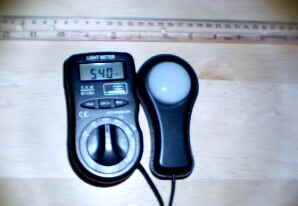
Buy direct- Flexible LED lamps, Gooseneck LED lamps, LED wall lamp, LED table lamp, LED Magnet base lamp LED lamps from the manufacturer of high power LED light product Go to Buy a lamp, or LED Light Product or Build your Lamp Lux and lumens per watts- The difference between the Lux and the lumen is that the Lux takes into account the area over which the luminous flux is spread LEDRunlights measurements are done using one high power LED. The beam diameter is 14 inches when the distance between the lamp head (LED) and the light meter is 11 inches. Typically, the lighting from our new LED lamps are 540 to 561 Lux when the lamp head is 11 inches from the light detector.
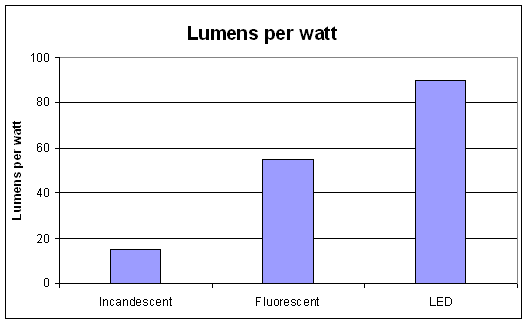
Lumens per watts chart: Typically the LED lighting is 80-105 lumens per watts chart.
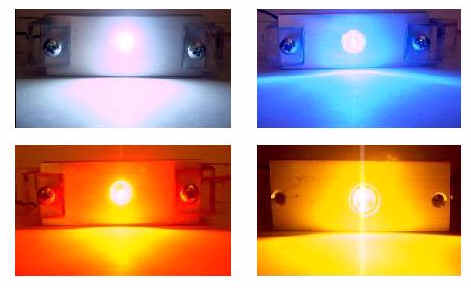
Conventional incandescent light bulbs typically are about 15 lumens per watt and the compact fluorescent lamps are about 50 lumens per watt. LEDRunLights LLC, Manufacturer of high intensity and high power LED module for General lighting applications. LED Run Lights introducing a unique energy efficient LED insert/package module. (Typical 80 lumens per watts) The LED designed with high efficient thermal management, Keeping LED's COOL is the key for high quality LED's and helps extend LED life and reliability. LED Run Lights manufactures the LED lens with special material that will not change the optical characteristics during time. As the LED materials technology became more advanced, the light output was increased, while maintaining the efficiency and the reliability to an acceptable level, causing LED to become bright enough to be used for illumination, in various applications such as lamps and other lighting fixtures Buy a lamp or Click here for more on LED Light Product we are manufacturing 1. LED Lamps with gooseneck and Spring clip (49 types) Click here to Build your Lamp 2. LED lamps with Flexible tube and metal neck (50 types). Click here for more. 3. LED for signs, Backlights, channel letter and Traffic signal. LED light products available in colors: Blue, Red, White, Yellow, and Green. 4. LED for General Lighting and Decoration, available with 3, 6, and 9 high power LED's (45 types). 5. LED light products available in colors: Blue, Red, White, Yellow, and Green. 6. Illuminate highway and freeway signs using High power LED product (27 types). 7. Lighting bar for parking Garage: 3 to 12 foot bar with high power LED heads lamp, each head can be with single or double sided light source. 8. Cost-effective traffic signal lamps using LED (light-emitting diodes) 9. LED desk lamp, go to Buy a lamp or Click here to Build your Lamp 10. LED wall lamp go to Buy a lamp or Click here to Build your Lamp 11. LED table lamp go to Buy a lamp or Click here to Build your Lamp 12. LED lamp with magnet base go to Buy a lamp or Click here for Magnet Base LED Lamp
Typical Advantages and Disadvantage of using LED
Use LED light in : car led lights, automotive led lights, truck led lights, 12 volt led lights, battery led lights, led tail lights, led grow lights LED vehicle lights, LED lighting at home, LED in the yards, LED in walkway, lamp-led, walls LED lamp Lighting6lamp magnet4lamp Lamp2wall2flexible, acrylic2lamp, magnet5lamp, Gooseneck4, Buy a lamp, wall mount base LED Lamp, quality, bulb, ledrunlights11, ledinsert, ledrunlights1, ledrunlights2, ledrunlights3, ledrunlights4, ledrunlights5, ledrunlights6, ledrunlights7, ledrunlights8, ledrunlights9, ledrunlights10, ledrunlights12, support, ledinsert2, ledprice2, Gooseneck LED lighting, Light panel , How to connect 3 LED's, How to connect 6 LED's, How to connect 9 LED's or more Part Number and price, Type 569446, Type 569552, Type 569667, Type 569799, Type 569777, LED light, Power supply, Product On Sale, Spring clip led lamp, Parking Garage, LED, Lamps, Build your Lamp, terms, Magnet Base LED Lamp, Angle of the light beam, Signage, signs, Important safety instruction, black gooseneck, two heads, black magnet2lamp, gooseneck2lamps, wall2lamp4, two2gooseneck, magnet4lighting, flexible2lamp, computer, two head, Black1spring1lamp LED Run Lights- Light Emitting Diode Run Lights
|
||||||||||||||||||||||||||